HVAC Maintenance Plan Automation: What to Automate First
A practical guide for HVAC companies that want maintenance plan automation to improve renewal reminders, tune-up bookings, lapsed customer reactivation, technician handoffs, and review requests.
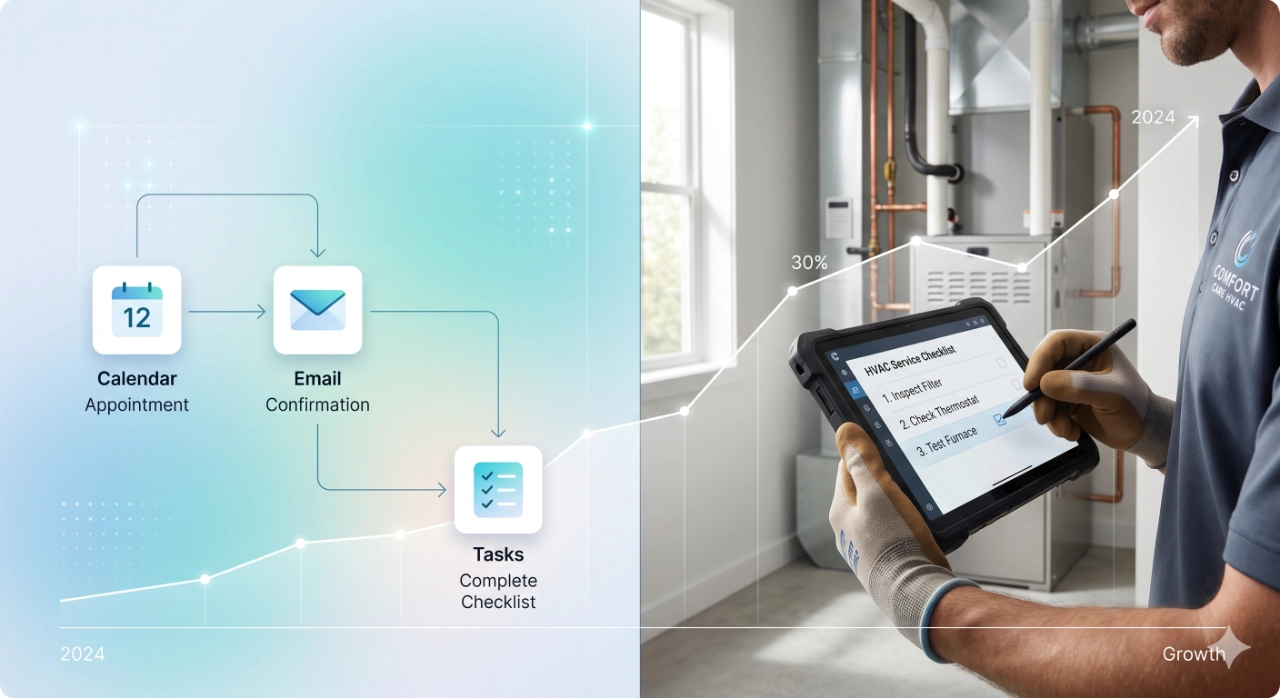
Why HVAC maintenance plans need operational follow-through
A maintenance plan is only valuable when the next step actually happens. The customer can understand the offer, trust the technician, and intend to keep the system maintained, but the plan still leaks revenue if renewal dates, tune-up windows, office tasks, and review requests live in separate places.
For a small HVAC team in Phoenix, Buckeye, or another high-demand market, the problem usually is not a lack of software. It is that every plan customer creates a chain of follow-through: confirm the plan details, schedule the seasonal visit, remind the customer, capture technician notes, renew before expiration, reactivate lapsed members, and ask satisfied customers for reviews.
HVAC maintenance plan automation should start with that chain. The goal is not to automate every customer touch. The goal is to make sure the most important follow-ups happen on time without asking the owner, dispatcher, or technician to remember every account manually.
1. Renewal reminders before the plan expires
Renewal reminders are usually the first automation to build because they protect revenue that already exists. A customer who bought a maintenance plan once has already shown trust. If the plan lapses silently, the company has to win the relationship again later.
Start with a simple sequence tied to the plan end date. Send the first reminder 45 to 60 days before expiration, follow with a shorter reminder around 30 days, and create an office task for customers who have not renewed within the final two weeks. The message should name the plan, explain what continues, and make the renewal action obvious.
Keep human review in the workflow for exceptions. If a customer had a complaint, unresolved estimate, or billing issue, the renewal should route to the office before an automated message goes out. Automation should make renewals visible; it should not ignore context the team already knows.
2. Seasonal tune-up prompts that drive bookings
The next automation should prompt plan members to schedule seasonal tune-ups before demand spikes. In HVAC, timing matters. Cooling tune-ups pushed too close to the first heat wave compete with emergency calls, replacement estimates, and a tighter dispatch board.
Build reminders around service windows instead of vague calendar blasts. A spring cooling tune-up prompt can go to active plan members who have not scheduled the visit yet. A fall heating check can do the same for customers with heat pumps, furnaces, or dual-service plans. The reminder should include the reason to book now and a direct scheduling path.
For small teams, this does not need complex personalization. Start with plan status, last visit date, equipment type if available, and whether an appointment is already booked. Suppress reminders for customers who are already on the calendar so the office does not create confusion.
3. Lapsed customer reactivation
After renewals and tune-up prompts, build a workflow for lapsed maintenance customers. These are customers who previously bought the plan or used seasonal service but have not renewed, booked, or responded within the expected window. They are easier to reach than cold leads because the company already has service history.
Segment the first version by recency. A customer who lapsed 45 days ago should receive a different message than someone who has been inactive for 18 months. The near-term message can focus on continuing plan benefits. The longer-lapsed message should be framed as a seasonal check-in with a low-friction way to restart service.
Reactivation should also alert the team when a customer responds. If a plan member replies with questions about price, equipment age, or a past repair, a person should take over. The automation gets the conversation restarted; the office or comfort advisor closes the loop.
4. Technician notes that trigger the right follow-up
Technician notes are one of the most useful inputs in a maintenance-plan workflow. A tune-up might reveal a weak capacitor, dirty coil, aging system, filter issue, membership question, or future replacement opportunity. If those notes stay buried in the job record, the plan loses value.
Create a small set of note categories that trigger follow-up tasks. Examples include recommended repair, estimate needed, customer interested in renewal, equipment nearing replacement age, indoor air quality opportunity, and service concern. Each category should create the next office action with a clear owner and deadline.
Do not make technicians write marketing copy from the field. Give them simple checkboxes or short-note prompts. The office can review the note, clean up the customer-facing message, and decide whether the follow-up should be automated, personal, or paused.
5. Review requests after successful plan visits
Maintenance-plan customers often interact with the company more than once, which makes them strong candidates for Google reviews when the experience is good. A post-visit review request should fire after completed tune-ups, successful repairs tied to the plan, or renewal conversations that end positively.
Timing matters. Send the request while the service experience is still fresh, but only after the job is marked complete and no service issue is open. The message should thank the customer, reference the completed visit in plain language, and link through the approved Google Business Profile review path.
Build a recovery path for unhappy customers. If the visit has a complaint, callback, billing dispute, or technician concern, route that record to a person first. Review automation should support local trust, not pressure frustrated customers into a public rating before the issue is handled.
Where human review still matters
The best maintenance-plan automations make routine follow-up reliable while keeping judgment with the team. Renewal reminders, seasonal prompts, reactivation check-ins, and review requests can run from clear triggers. Price exceptions, unhappy customers, replacement conversations, and unusual service history should get human review.
A practical rule is to automate the reminder and escalate the decision. For example, the system can identify a lapsed plan customer, create the task, and draft the outreach. The office can review the history before sending anything sensitive. The same applies to technician notes: automate the handoff, but let a person decide how to frame the recommendation.
This balance matters for small HVAC teams. They need fewer missed follow-ups, not a rigid system that sends the wrong message at the wrong time. Start with simple triggers, clear suppression rules, and one owner for every exception.
Metrics for plan renewal, booking, and reactivation
Measure maintenance plan automation by outcomes, not by the number of workflows created. The first dashboard can be simple: active plan count, renewal rate, renewals due in the next 60 days, tune-up booking rate, unbooked plan members by season, lapsed customer reactivation rate, and reviews generated from plan visits.
Track response times too. How quickly does the office follow up when a plan customer replies? How long do technician-note tasks stay open? How many customers book from the first seasonal prompt versus the second or third? These numbers show whether the system is helping the team act sooner.
Review the workflow every week during seasonal ramp-up. If renewal reminders get opens but few renewals, clarify the offer or booking path. If tune-up prompts create calls but not appointments, simplify scheduling. If technician notes pile up, reduce categories or assign one person to review them daily.
A starter automation sequence for small HVAC teams
A small HVAC company does not need an enterprise build to improve maintenance-plan performance. Start with five workflows: renewal reminders, seasonal tune-up prompts, lapsed customer reactivation, technician-note task creation, and post-visit review requests. These cover the most common leaks between selling the plan and keeping the customer active.
Build one workflow at a time. Define the trigger, the audience, the message, the suppression rules, the human owner, and the metric. Then run it long enough to see whether bookings, renewals, reactivations, and reviews improve.
Once those workflows are working, the company has a stronger foundation for recurring services planning, lead generation, Google Business Profile updates, and local SEO content. The maintenance plan becomes more than an offer. It becomes an operating system for keeping the right customers scheduled, informed, and connected to the business.
Paired Google Business Profile post plan
Publish a Google Business Profile update before the next seasonal demand spike. The post angle should explain that HVAC tune-up reminders and maintenance-plan renewal prompts help homeowners stay ahead of the rush. Keep the copy short, service-focused, and tied to recurring maintenance rather than emergency repair.
Suggested GBP post copy: Plan members should not have to remember every tune-up window on their own. Buckeye GMB helps HVAC teams automate seasonal maintenance reminders, renewal prompts, and post-visit follow-up so more customers book before demand spikes. Use the native Learn More button to point to the recurring-services page.
Do not include a phone number in the post text. Use the platform's native call-to-action button and link the post to /recurring-services so the next step stays measurable.
RESOURCES
Map the plan offer, reminders, booking prompts, renewal workflow, and review requests that keep maintenance customers active.
Connect new HVAC leads to fast response, qualification, and booking workflows before they go cold.
See the broader home-service recurring revenue model that this HVAC maintenance-plan workflow builds on.
Talk through the first HVAC maintenance-plan automation your team should build.
Make the next maintenance visit easier to book.
Buckeye GMB helps Phoenix and Buckeye-area HVAC teams turn maintenance plans into practical reminders, renewal prompts, reactivation workflows, technician handoffs, and review requests.
Plan Your Recurring-Service Workflow